IDC PeerScape: Best Practices in Exposure Management
Actionable guidance on reducing risk across today’s expanding attack surface.
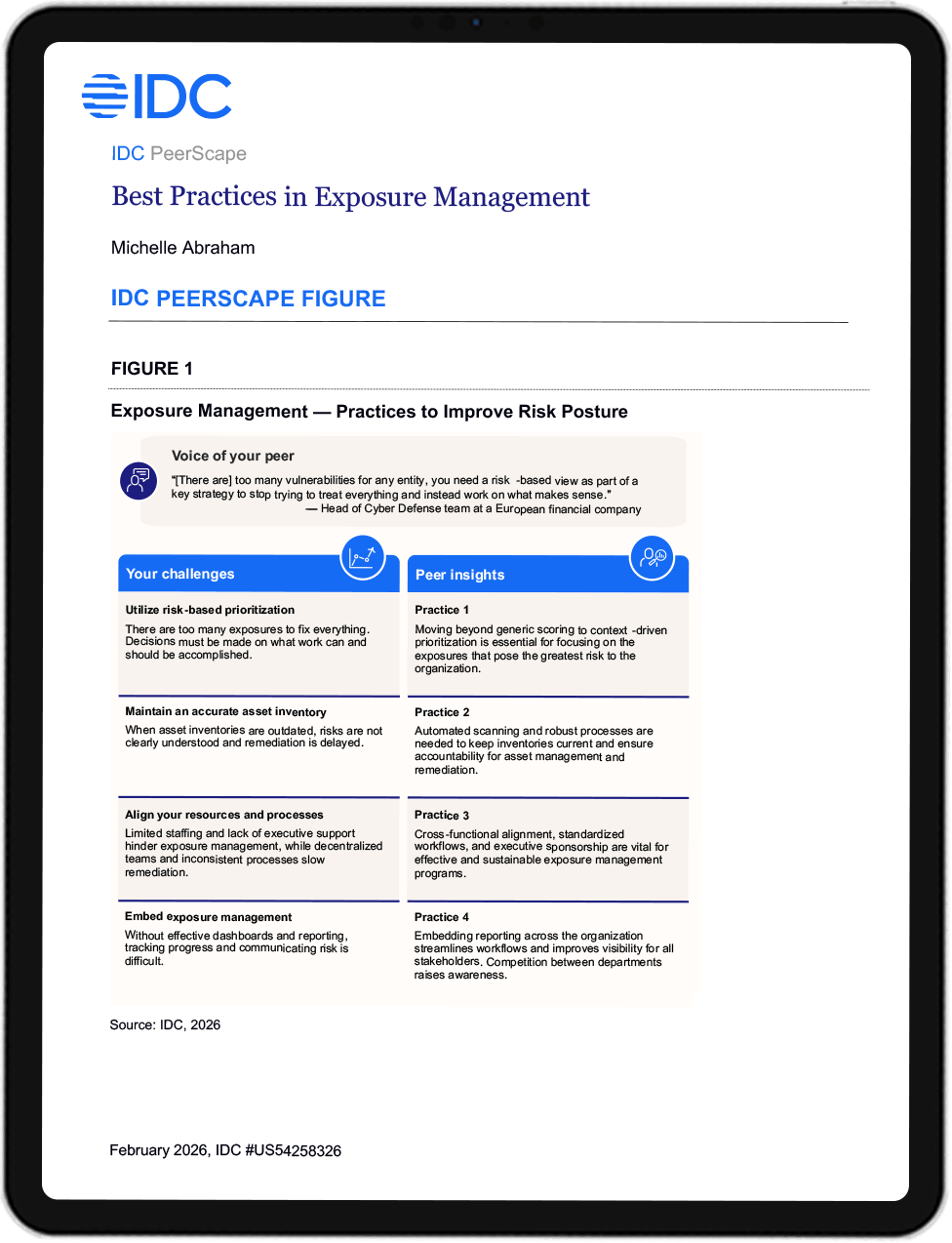
This IDC PeerScape outlines proven exposure management practices drawn from peer insights across industries. Learn how security teams move beyond traditional vulnerability management to prioritize risk, improve remediation efficiency, and align teams around a shared view of exposure.
Download the report today
Clear guidance to improve risk posture
As organizations face an overwhelming volume of vulnerabilities, misconfigurations, and attack surface data,
knowing what to remediate first has become a critical challenge. This IDC PeerScape focuses on how security
leaders are operationalizing exposure management through risk-based prioritization, accurate asset visibility,
organizational alignment, and integrated reporting.
The report captures real-world challenges and peer insights from global organizations across industriesincluding
financial services, manufacturing, healthcare, education, and technologyto help security teams move from data
overload to decisive action.
Four core practices to strengthen exposure management outcomes:
- Risk-based prioritization: Move beyond CVSS-only approaches and focus remediation on exposures that matter most based on asset context and business impact.
- Comprehensive asset visibility and ownership: Improve remediation speed by maintaining accurate inventories, continuous discovery, and clearly assigned ownership.
- Resource and process alignment: Address staffing constraints and decentralization by standardizing workflows, SLAs, and cross-functional collaboration.
- Embedded reporting and accountability: Integrate exposure data across security, IT, and compliance teams with dashboards and automation that drive urgency and transparency.
Maintaining accurate asset inventories and clear ownership remains a foundational challenge in exposure management. Continuous scanning and automated tagging help security teams develop better programs to effectively manage risk.
”

FAQs
Best practices in exposure management
Learn how security teams are reducing risk with smarter prioritization and better alignment.