Blog
Blog
Catch up on industry news, thought leadership, announcements, and more from Tanium.
Tanium Subscription Center
Get Tanium digests straight to your inbox, including the latest thought leadership, industry news and best practices for IT security and operations.

Bringing Tanium’s real-time endpoint intelligence into enterprise AI workflows with MCP
Tanium Atlas MCP Server helps security and IT teams safely connect AI clients and agents to governed endpoint data, so investigations and operations can move faster without sacrificing control.
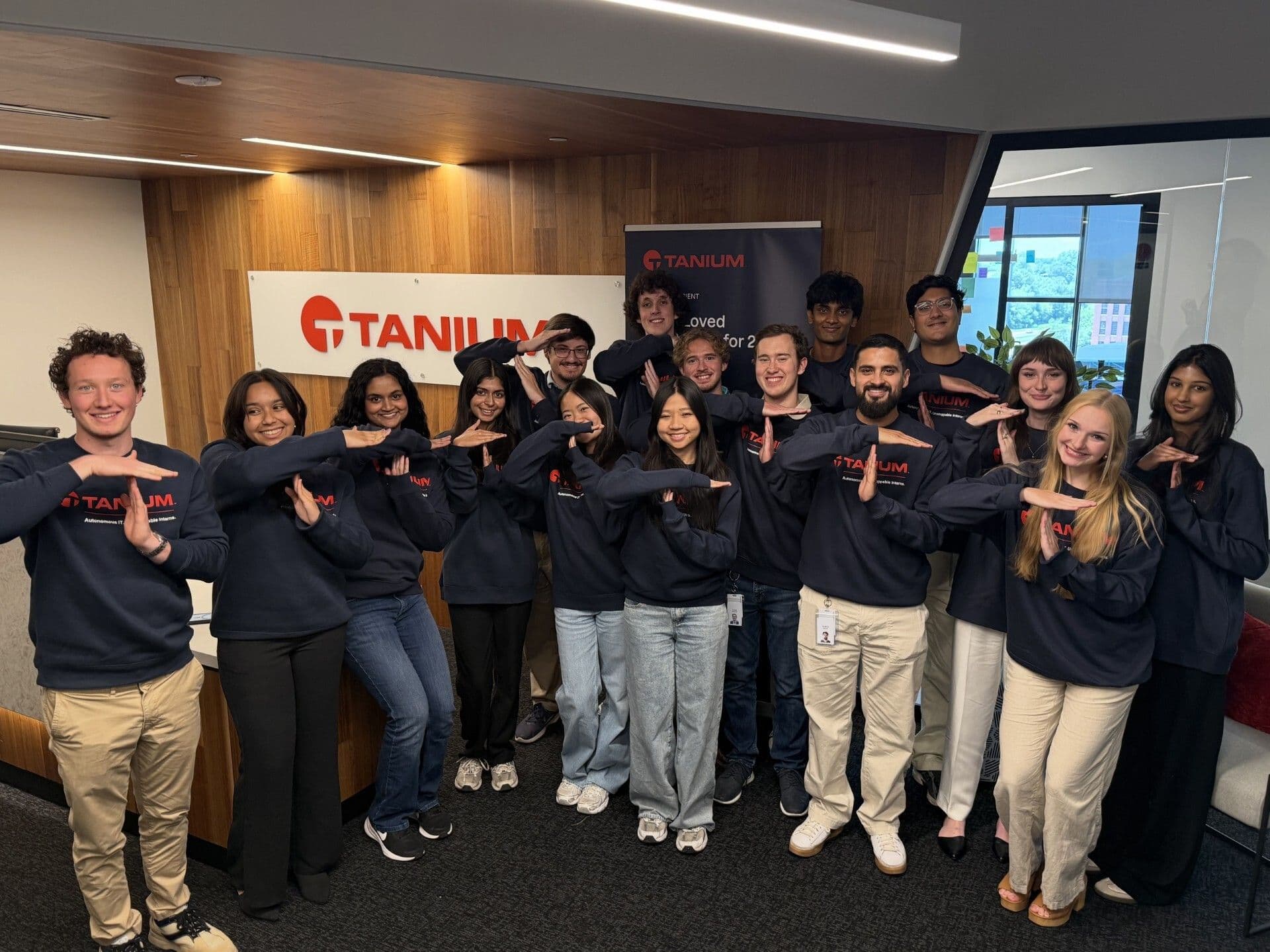
Tanium’s Summer Intern Program: A Launch Pad to Leadership in Cybersecurity
A look at Tanium’s leading summer internship program – and why it’s a great option for students and professionals entering cybersecurity.

Security automation tools: What they are and how they work
Security automation tools use software-driven workflows to detect, investigate, and remediate cyberthreats with minimal manual intervention. By integrating across your security stack, these tools reduce alert fatigue, accelerate automated incident response, and maintain continuous compliance.

Automated vulnerability management explained: Tools, process, and benefits
Automated vulnerability management uses continuous scanning, risk-based prioritization, and orchestrated remediation workflows to identify, assess, and fix security weaknesses with minimal manual intervention.

Building an effective endpoint security strategy in 2026
An endpoint security strategy is a structured plan that defines how an organization protects, monitors, and manages all devices connecting to its network (including laptops, desktops, servers, mobile devices, cloud workloads, and OT systems) through coordinated policies for access control, threat detection, vulnerability management, and incident response.

Inside Tanium: Celebrating women in engineering with patent holder and problem solver Julia Grunewald
Every great innovation begins with someone willing to ask a better question. On International Women in Engineering Day, we celebrate the women who look at a broken process and decide to build something new. At Tanium, we have plenty of those women. This June 23, we're proud to shine a spotlight on Julia Grunewald, a product leader who thought differently, changed how our customers understand risk, and earned two U.S. patents along the way.

Continuous vulnerability management: Is your program actually continuous?
Continuous vulnerability management (CVM) is an ongoing, automated approach to discovering, analyzing, prioritizing, and remediating security weaknesses across an organization's IT environment. It replaces periodic scans with real-time visibility that shrinks attacker opportunity windows.

Tanium Atlas: One operator. The full weight of the platform.
Tanium Atlas is generally available to every commercial and U.S. Government cloud customer. Here's what changes for the operators doing the work in an AI threat landscape, and why I wanted to write this one myself.

See the full attack surface. Act on what actually matters.
CVE volumes are climbing, AI-discovered threats are multiplying, and visibility across the full attack surface remains fragmented. Bolt-on solutions and manual handoffs simply can't keep pace. Organizations who are getting ahead share one thing in common: they've replaced fragmented workflows with AI-powered prioritization and autonomous remediation across a unified view of both internal and external risk.
Security Update: Tanium’s Response to the Klue Breach that Allowed Data Exfiltration from Salesforce
Tanium's response to the Klue supply-chain breach that exposed Salesforce CRM data. Learn what happened, what information was involved, and how to stay safe.
Agentic AI security: Key challenges and how to address them
Agentic AI security protects autonomous AI systems that independently plan, reason, and execute multi-step actions across enterprise environments without continuous human oversight.

Risk-based vulnerability management explained
Risk-based vulnerability management (RBVM) is a cybersecurity methodology that prioritizes vulnerabilities based on actual business risk rather than technical severity scores in isolation. RBVM combines vulnerability severity, exploitation likelihood, threat intelligence, and asset criticality to focus remediation on the exposures most likely to be weaponized against your specific environment.