Topic
Tech Insights
Hunting Our Own Vulnerabilities First: Tanium’s Frontier AI Security Commitment
Tanium is using frontier AI models to hunt vulnerabilities in its own software before anyone else can. Here's what we're learning, and why customers should expect more security advisories and patches.

Slash Commands Bring Expert SecOps Workflows to Atlas
With /hunt, /investigate, and /signal, Atlas turns a simple chat interaction into a guided SecOps workflow grounded in live endpoint state.
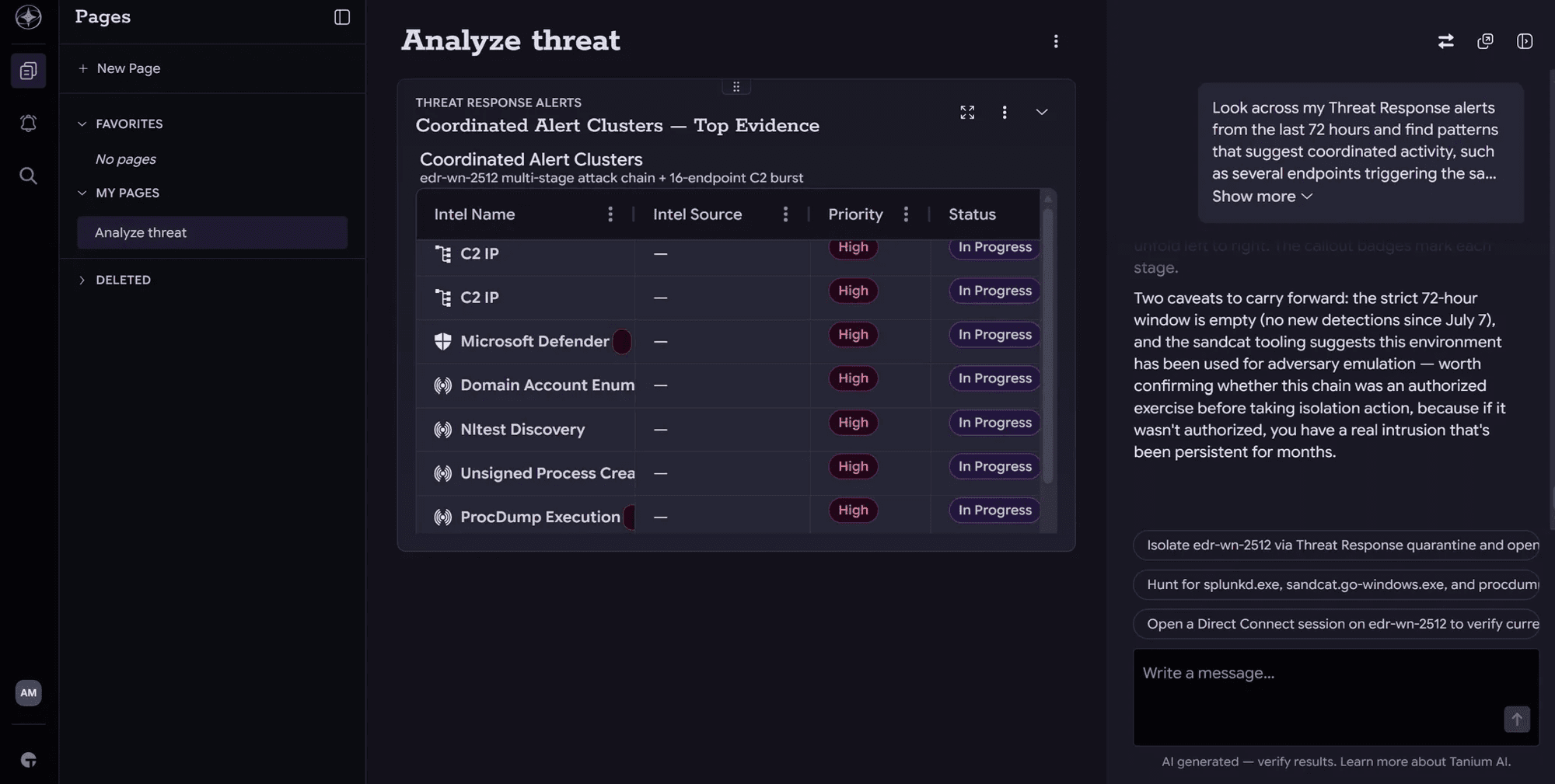
Introducing Agentic SecOps: Live Endpoint Truth for the AI-Driven SOC
Agentic SecOps changes the operating model: with Tanium Atlas, security teams can direct work in natural language, reason over live endpoint data, and keep humans in control.
Tanium Atlas: One operator. The full weight of the platform.
Tanium Atlas is generally available to every commercial and U.S. Government cloud customer. Here's what changes for the operators doing the work in an AI threat landscape, and why I wanted to write this one myself.

See the full attack surface. Act on what actually matters.
CVE volumes are climbing, AI-discovered threats are multiplying, and visibility across the full attack surface remains fragmented. Bolt-on solutions and manual handoffs simply can't keep pace. Organizations who are getting ahead share one thing in common: they've replaced fragmented workflows with AI-powered prioritization and autonomous remediation across a unified view of both internal and external risk.
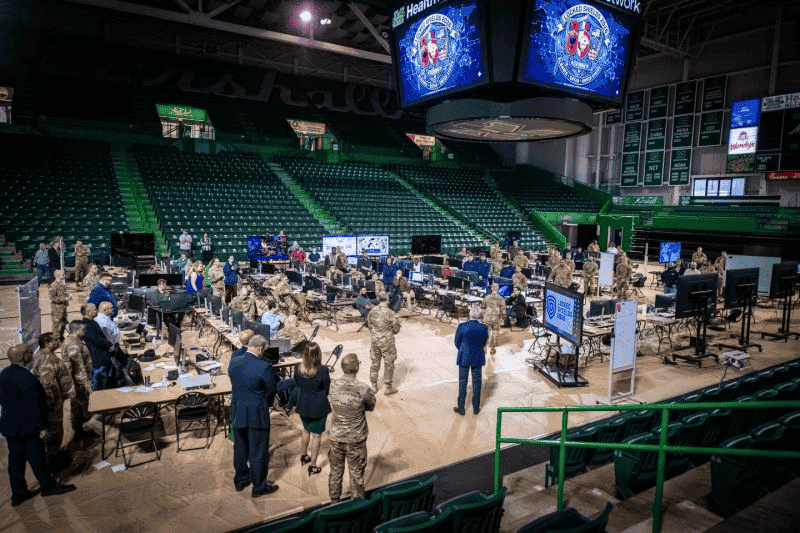
Locked Shields and the OSI Model: Stop blaming the firewall
A back-to-basics walk through what blue teams actually defend at each layer, and why the unglamorous stuff (Layer 2, BGP) keeps deciding the scoreboard.

Security teams are solving the wrong visibility problem
AI has expanded the threat surface, the estate, and the cost of not seeing clearly—all at once.

Is Windows Autopatch ready for enterprise use, or does it trade too much control for convenience?
Windows Autopatch is a Microsoft service, included with Windows Enterprise E3 and above, that automates the scheduling and deployment of Windows quality updates, driver updates, and Microsoft 365 app updates across Intune-managed devices. It reduces the manual overhead of patch scheduling by managing update rings and cadence on your behalf, but it does so by abstracting away the granular controls that enterprise patch management workflows typically depend on.

How smart governance can contain agentic sprawl
As AI agents multiply at machine speed across the enterprise, governance must evolve to match their autonomy, scale, and risk.
Tanium Atlas: AI that doesn't just answer—it executes
Tanium Atlas brings the power of Tanium to a single prompt: describe what you need, and Atlas acts—with your governance built in.
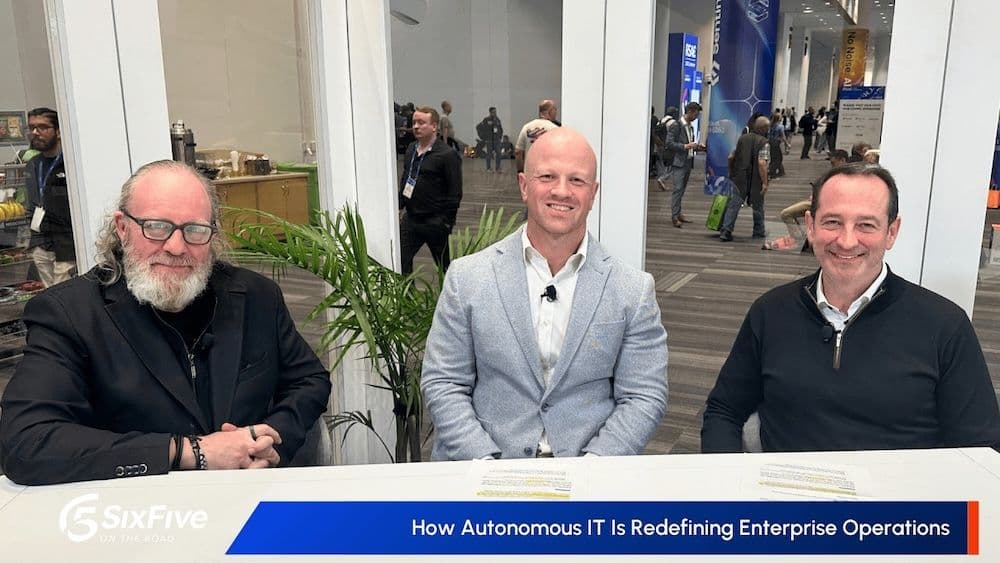
Autonomous IT operations: Transforming enterprise IT management
At RSAC 2026, Tanium CTO Matt Quinn makes the case that Autonomous IT (real-time, endpoint-level decision-making at scale) is the operational foundation enterprises must build before AI acceleration leaves them behind.
Understanding shadow AI in your endpoint environment
Learn how shadow AI appears on endpoints, from local models to MCP servers, and why visibility, governance, and secure configuration matter now.