Topic
Tanium Blog
AI is Accelerating Your Environment. Our Connector Keeps Up: The Next Evolution of the Service Graph Connector for Tanium & ServiceNow
Two new Service Graph Connectors for Tanium Atlas bring delta sync to your ServiceNow CMDB, sending only new and changed endpoint data.
Hunter Wins: HuntIQ Tradecraft is your new hunt library
The Hunt or be Hunted series tells the hunt stories. HuntIQ Tradecraft, now live on the Tanium Resource Center, gives you the playbooks to run them yourself.
Hunting Our Own Vulnerabilities First: Tanium’s Frontier AI Security Commitment
Tanium is using frontier AI models to hunt vulnerabilities in its own software before anyone else can. Here's what we're learning, and why customers should expect more security advisories and patches.
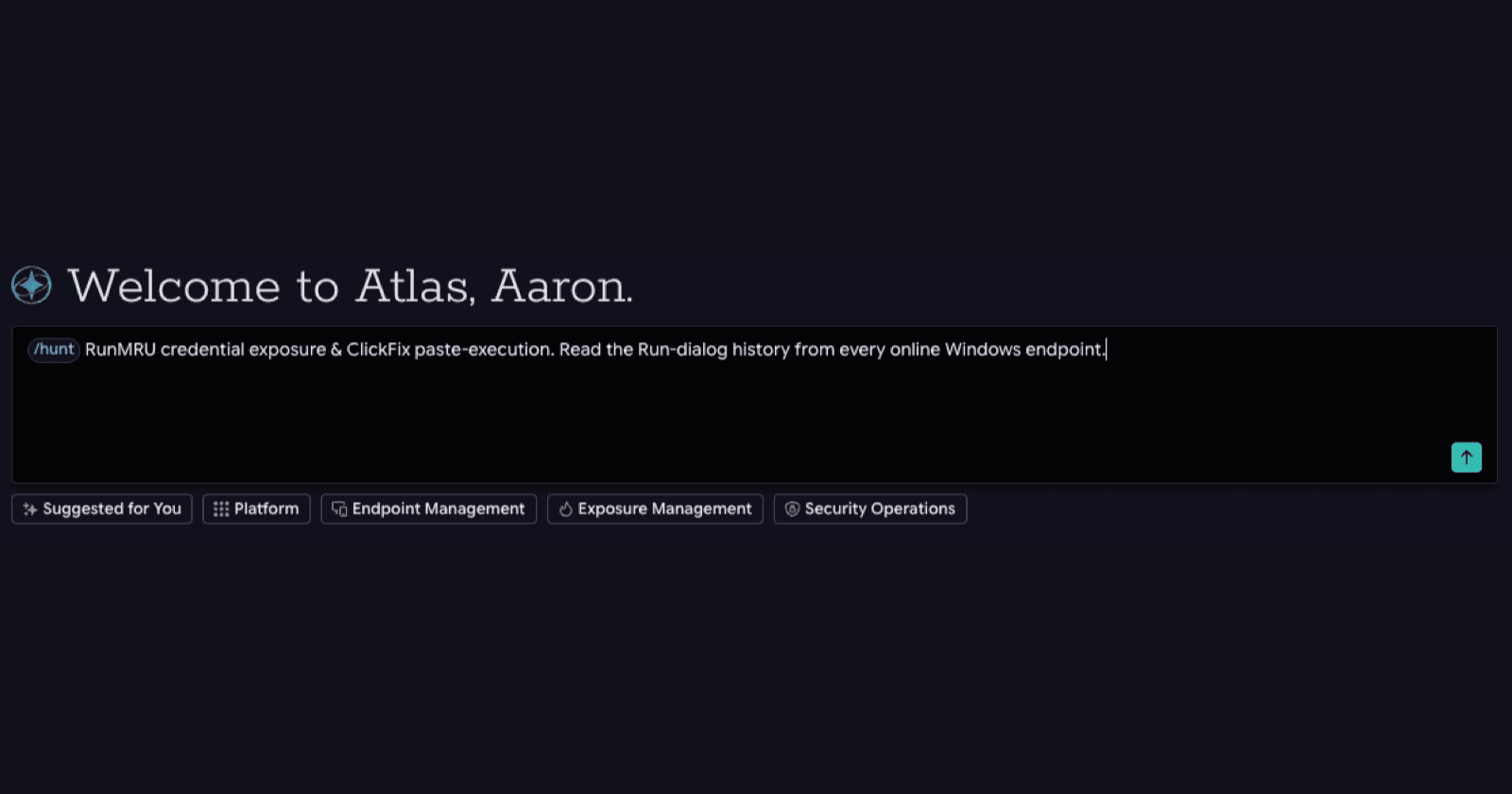
Hunt or be Hunted: Hunting RunMRU for Credential Exposure
A hunting playbook built for ClickFix went looking for pasted commands and found a working credential to a third-party portal instead.

Hunt or be Hunted: FalconFlank Zero-Day
Within 48 hours of the FalconFlank exploit's release, Tanium HuntIQ built seven behavioral detections and a single Atlas hunt prompt to catch attackers who turn CrowdStrike Falcon's own privileged clean-up against itself. See how Tanium Atlas sweeps an entire Windows fleet for the exposure in about a minute.

Hunt or be Hunted: ShieldBreak Zero-Day
Learn how Tanium HuntIQ turned a Windows Defender zero-day into a tested mitigation before a CVE was assigned.

The clock is ticking: Your roadmap to 31st October 2026
Along with the Bank of England in May, the ECB is requiring organisations to produce an action plan against AI-driven cyberattacks. What it wants, however, is not a strategy paper but proof of operational readiness.

Slash Commands Bring Expert SecOps Workflows to Atlas
With /hunt, /investigate, and /signal, Atlas turns a simple chat interaction into a guided SecOps workflow grounded in live endpoint state.
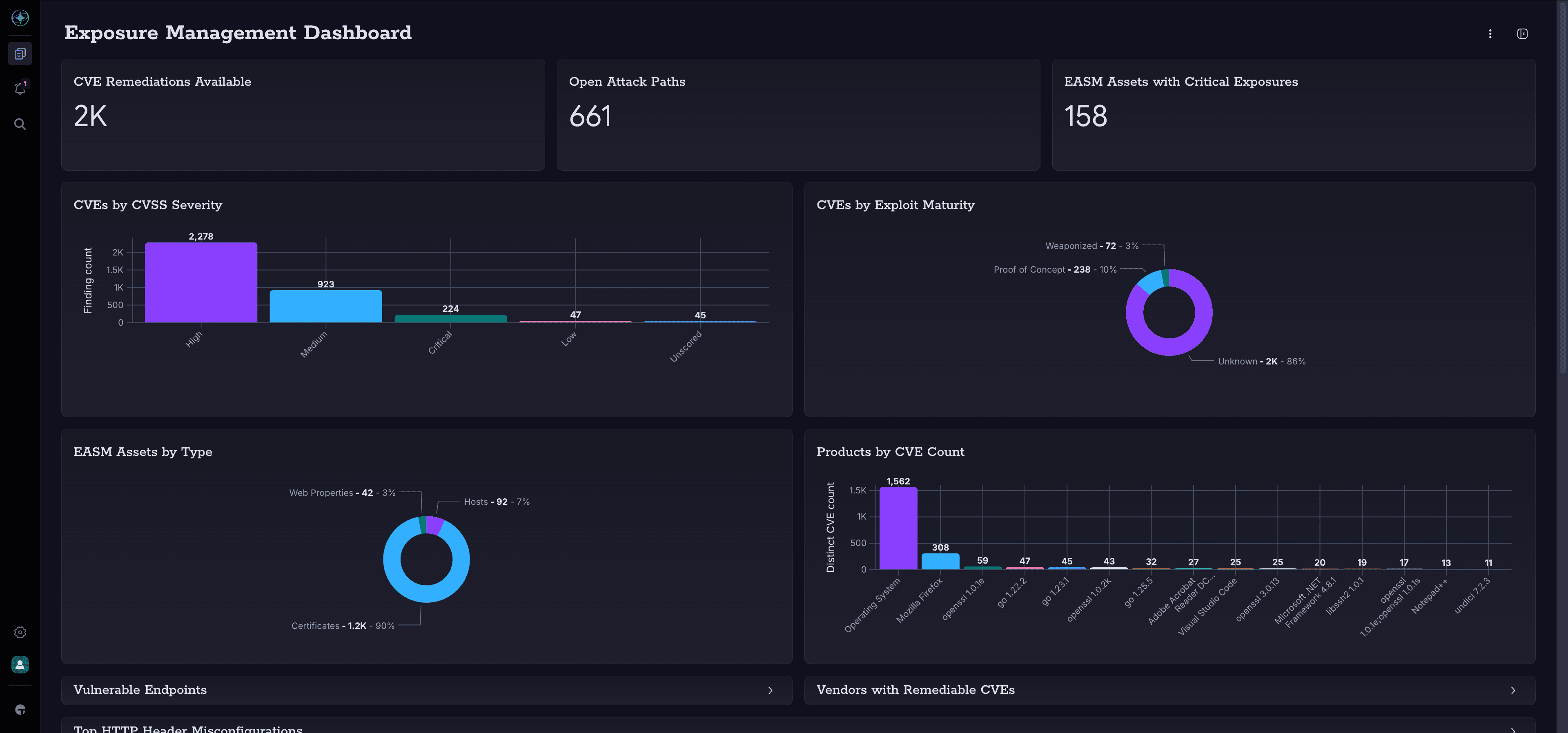
AI Is Accelerating Vulnerability Discovery. Tanium Helps You Keep Up.
Daily vulnerability findings across Tanium customer environments jumped from 10-40 billion to as high as 101 billion after mid-June 2026. Here is what is driving the surge and how to keep up.
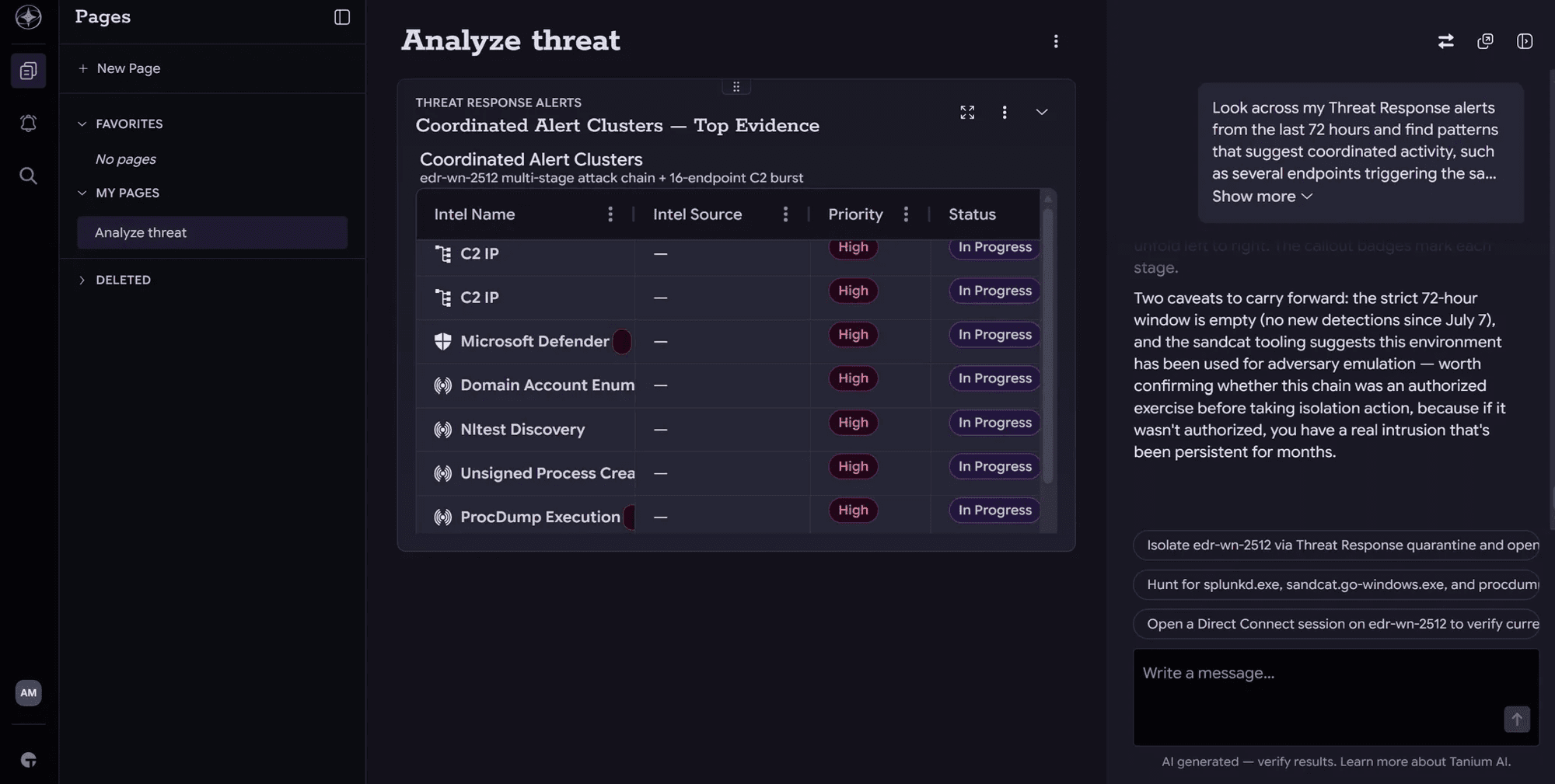
Introducing Agentic SecOps: Live Endpoint Truth for the AI-Driven SOC
Agentic SecOps changes the operating model: with Tanium Atlas, security teams can direct work in natural language, reason over live endpoint data, and keep humans in control.
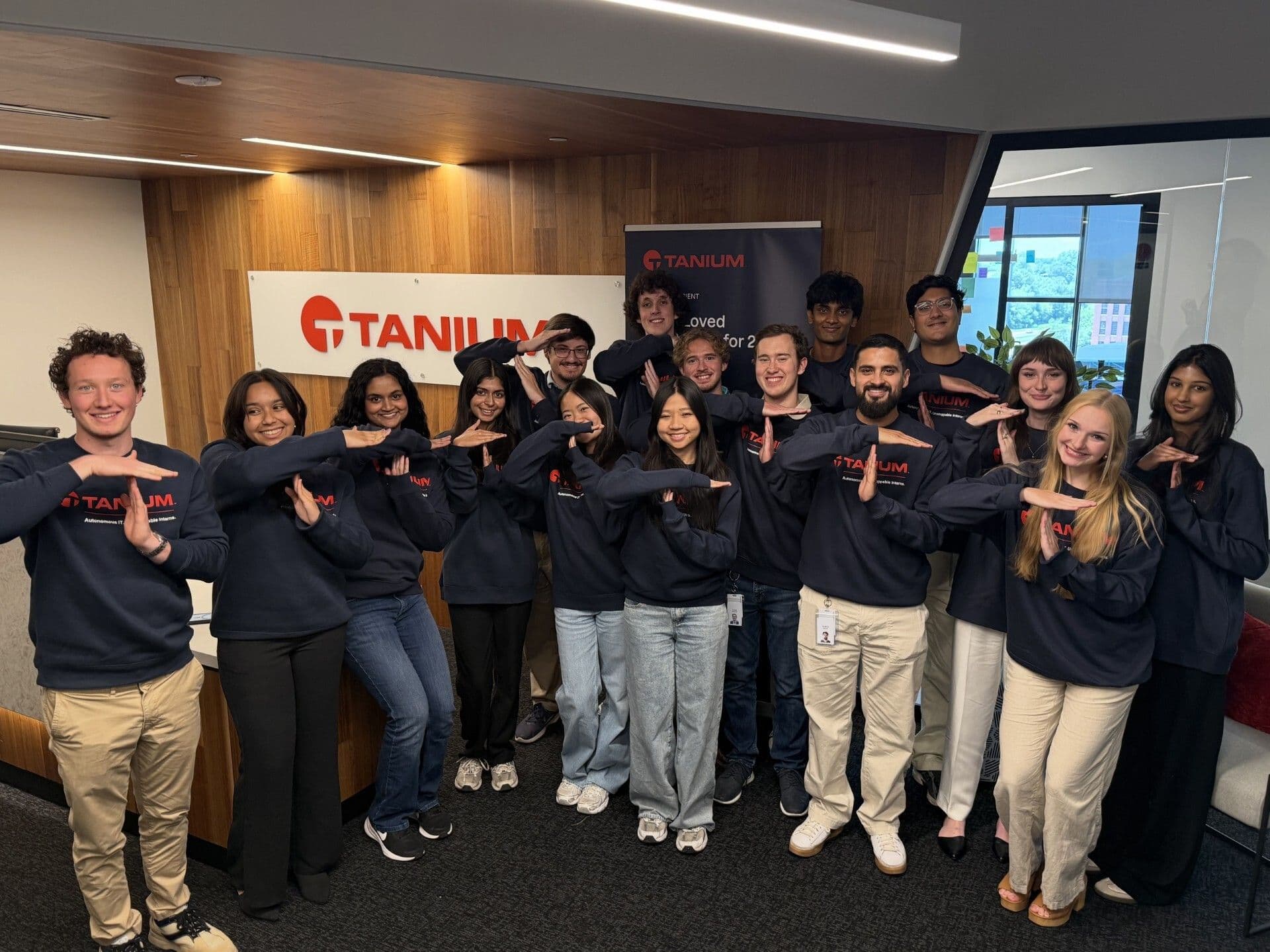
Tanium’s Summer Intern Program: A Launch Pad to Leadership in Cybersecurity
A look at Tanium’s leading summer internship program – and why it’s a great option for students and professionals entering cybersecurity.
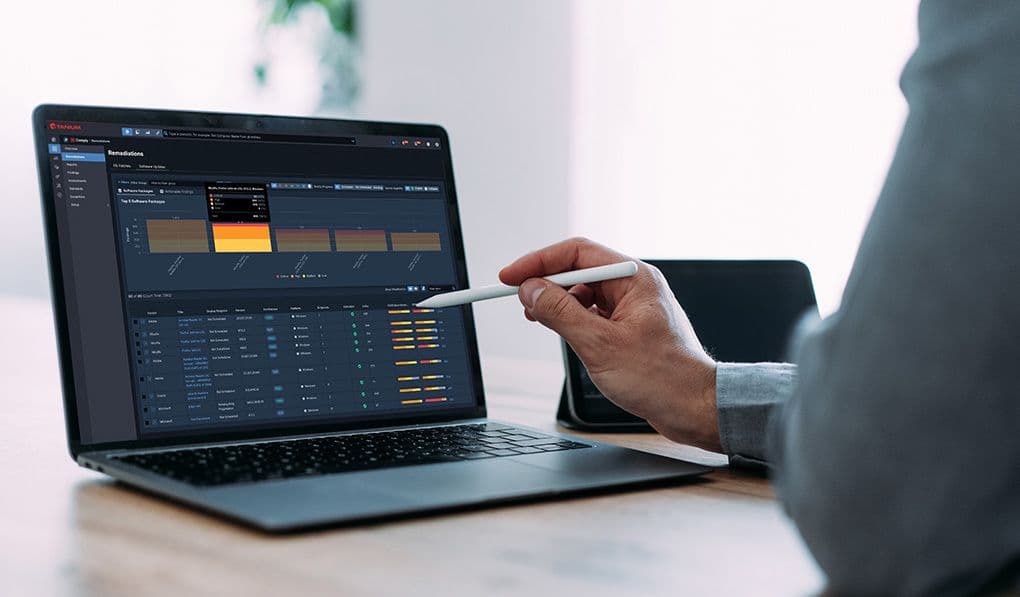
Security automation tools: What they are and how they work
Security automation tools use software-driven workflows to detect, investigate, and remediate cyberthreats with minimal manual intervention. By integrating across your security stack, these tools reduce alert fatigue, accelerate automated incident response, and maintain continuous compliance.